WHY ADVERTISING?
If your product is truly exceptional, why spend on advertising? Because even the best products need to be seen before they can be remembered.
Why Advertising?
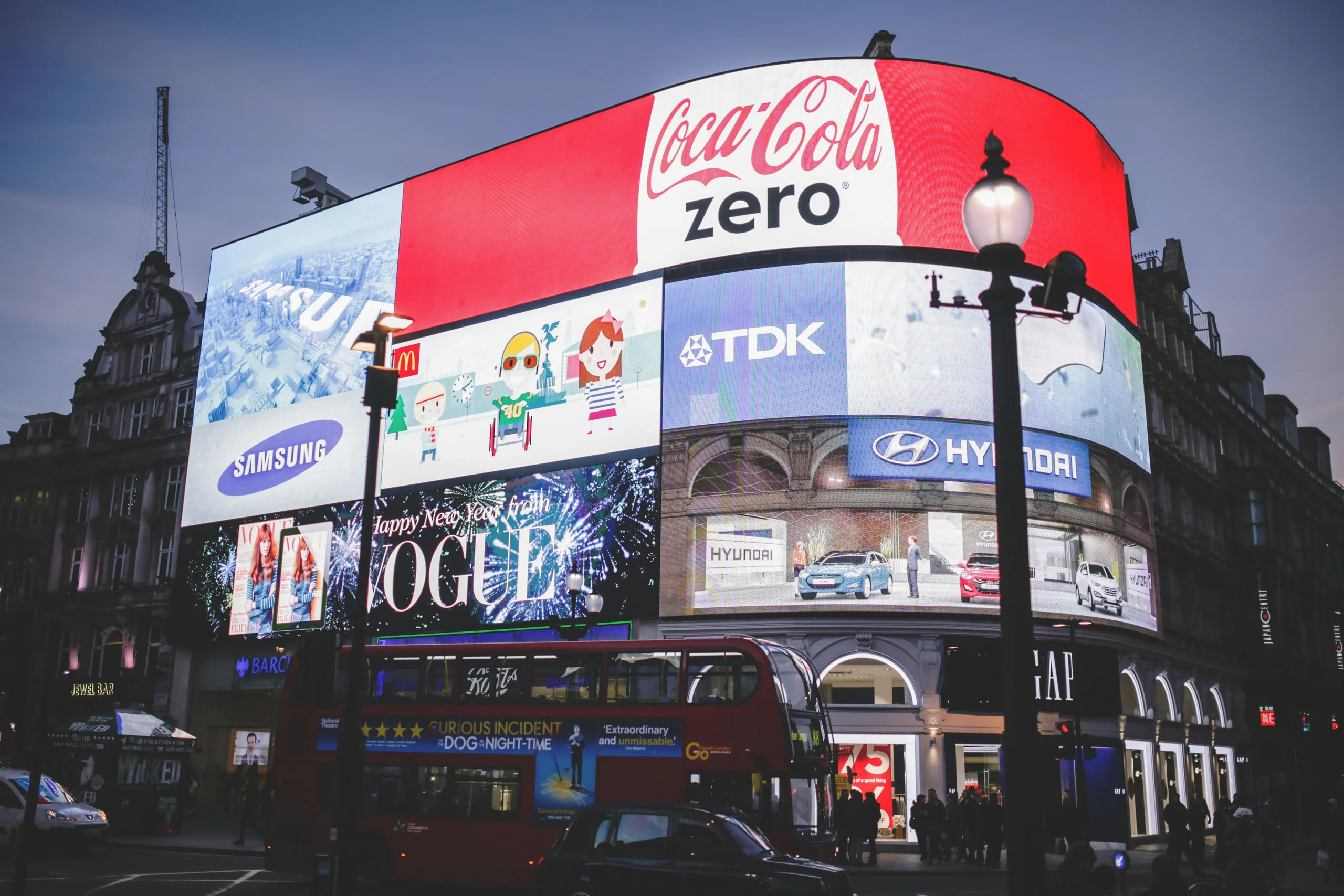
If your product is genuinely excellent, why spend money telling people about it? It is a fair question. A good product should speak for itself. A well-made product should earn its reputation. And eventually, a satisfied customer should bring another customer with them. But there is a quiet problem hidden inside that logic: a product cannot be chosen if it is never noticed. Before people can experience quality, they have to encounter the brand. And in the physical world, that first encounter often happens long before a conversation, a recommendation, or a purchase. It happens on a road. On a building. At a crossroads. On a large illuminated sign that catches the eye for only a few seconds. That is where outdoor advertising begins.
The Best Product in the Wrong Place Can Still Remain Invisible
Imagine a restaurant serving extraordinary food, but its name is hidden behind an ordinary wall. Imagine a showroom with exceptional products, but nothing outside tells passing customers that it exists. Imagine a new business opening on a busy road, surrounded by hundreds of vehicles every hour, while its sign is too small, too dull, or simply impossible to read from a distance. The problem is not the product. The problem is that nobody knows where to look. Outdoor advertising does something remarkably simple. It puts a brand into the physical landscape where people already live, travel and make decisions. Unlike an advertisement that asks someone to stop what they are doing, a well-designed outdoor sign becomes part of the journey itself. You may not have planned to see it. But you see it. And sometimes, that is enough to begin remembering.
Coca-Cola: A Product That Never Stopped Advertising
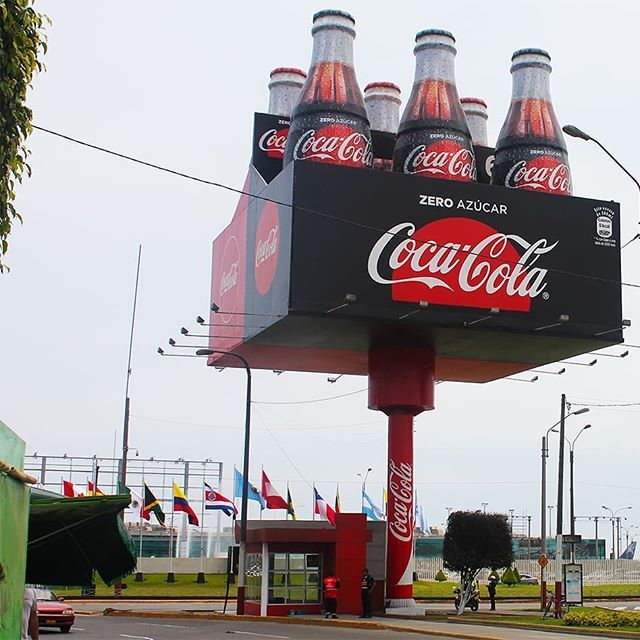
Few examples make this question more interesting than Coca-Cola. Coca-Cola does not exactly suffer from a lack of awareness. Almost everyone already knows the name, the bottle and the red-and-white identity. So why does a brand that is already one of the most recognisable in the world continue to invest so heavily in outdoor advertising? Because advertising is not only about introducing something unknown. It is also about maintaining presence. Coca-Cola's relationship with outdoor advertising stretches back more than a century. Its famous Times Square presence began in 1920, and over the decades the sign evolved from early illuminated displays to increasingly sophisticated digital installations. The lesson is fascinating.
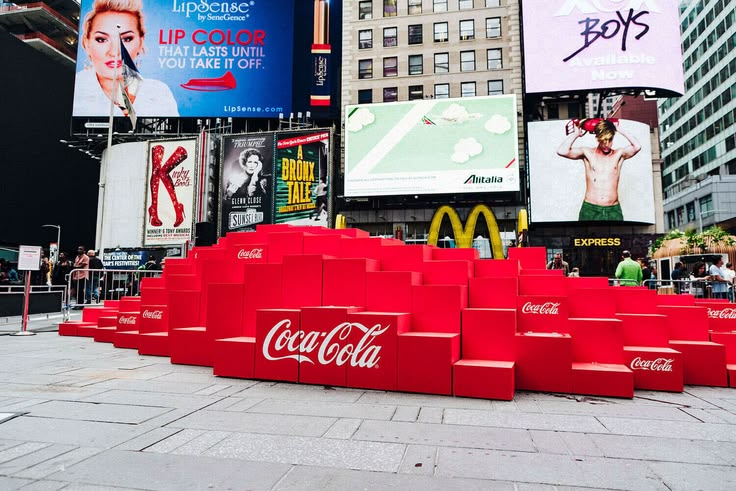
Coca-Cola does not advertise because people have never heard of Coca-Cola. It advertises because being familiar and being present are not the same thing. Every time that familiar red appears above a busy street, beside a road, or across a large illuminated display, the brand quietly renews its place in people's visual memory. The product remains the same. The presence keeps being renewed.
Apple Did Something Even Simpler
Apple's Shot on iPhone campaign offers another beautiful lesson in outdoor advertising.
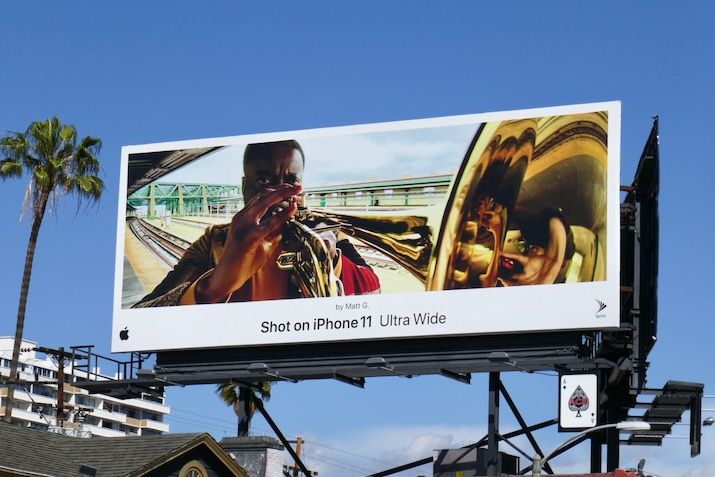
The idea was almost disarmingly simple: extraordinary photographs taken with an iPhone were enlarged and placed on billboards around the world, with very little copy competing for attention. The campaign was conceived specifically with outdoor placement in mind. There was no long explanation. No crowded list of specifications. Just an image large enough to make someone stop and think: “A phone took that?” The advertisement demonstrated the product instead of merely talking about it. That is one of the great strengths of outdoor advertising. A billboard has only a few seconds to communicate. The strongest ideas therefore tend to become visual before they become verbal. And this is where quality and advertising meet. A great product gives advertising something worth showing. Great advertising makes sure people actually see it.
Sometimes the Advertisement Becomes the Landmark
Then there are brands that understand something even deeper: an outdoor advertisement does not always have to look like an advertisement. McDonald's has repeatedly used outdoor spaces in ways that make the medium itself part of the idea. Its famous Follow the Arches campaign, for example, reduced the familiar Golden Arches into simple directional cues – turning a brand symbol into something useful to people on the road. More recently, McDonald's even experimented with outdoor billboards that used the smell of fries rather than conventional visual messaging. The point is not that every business needs an extravagant billboard. Quite the opposite. The lesson is that outdoor advertising works best when the idea respects the environment in which it is being seen. A sign beside a road has a different job from a sign outside a showroom. A building facade has a different relationship with people than a roadside billboard. A pylon has a different purpose from a small directional sign. Good outdoor advertising understands this. Great outdoor advertising uses it.

 lovelycrayon.com
So, Why Advertising?
Perhaps the answer is simpler than we make it. Advertising is not an apology for a weak product. A genuinely good product deserves to be discovered. A good business deserves to be remembered. A new brand deserves the opportunity to become familiar. And an established brand cannot assume that yesterday's visibility will automatically create tomorrow's memory. David Ogilvy, one of the most influential figures in modern advertising, understood the importance of giving people a reason to notice and care. His work repeatedly treated advertising not as noise, but as communication with a purpose. And perhaps the most fitting thought comes from Marshall McLuhan:
“Advertising is the greatest art form of the twentieth century.”
Marshall McLuhan
Whether or not we agree with the statement, outdoor advertising certainly has an unusual quality that other forms of communication often lack. It occupies real space. It shares the street with us. It becomes part of the places we travel through every day. That is why a well-made outdoor sign can do much more than announce a name. It can create familiarity before the first visit. Recognition before the first conversation. And memory before the first purchase. So, if your product is extremely good, should you still spend on advertising? Yes – not because your product needs to be better, but because someone needs to know that it exists. And sometimes, the first step from being good to being remembered is simply being seen.
The Thought to Take Away
“The best product in the world cannot become someone's choice until it first becomes part of their awareness.”
LOVELY CRAYON


Planning signage of your own?
Get a quote→